
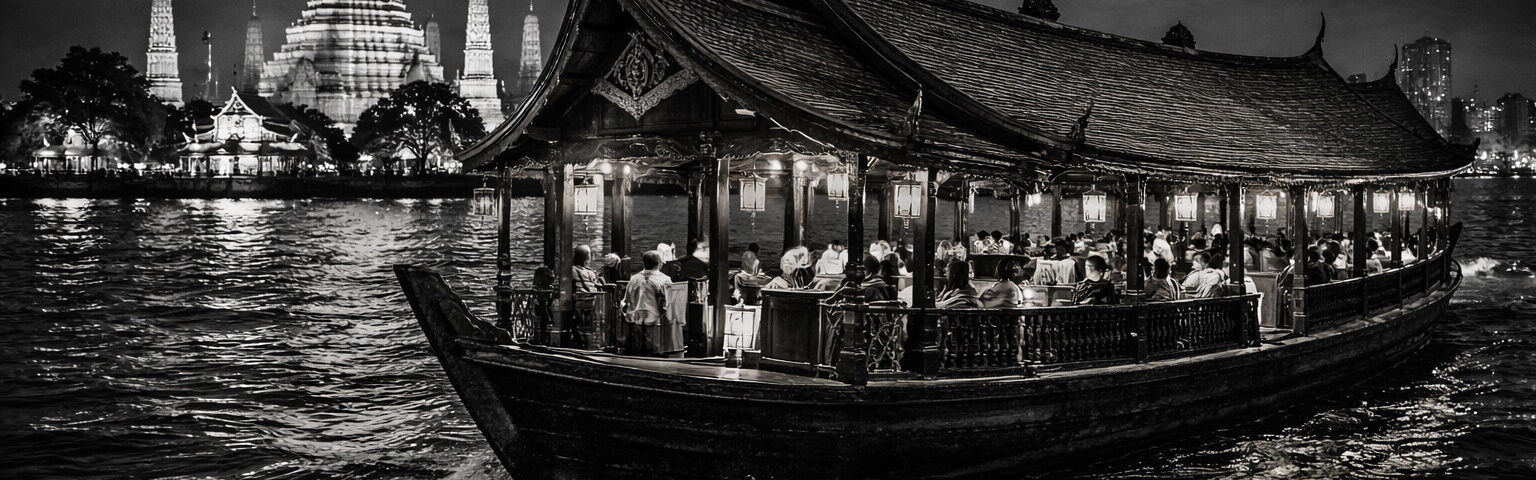
For centuries, the rhythm of Thailand was dictated by the tide and the teak. Before the age of concrete highways, the Chao Phraya River was the primary artery of the Kingdom, and the heavy-laden rice barge was its most essential traveler. Today, these vessels have been reborn, trading their cargo of grain for a cargo of history and high-end gastronomy.
The transformation of the traditional rice barge from a humble workhorse to a symbol of luxury is a testament to the enduring elegance of Siamese maritime engineering.
The Golden Age of River Trade
Originally known as Ruea Krachaeng, these massive barges were designed to carry rice, spices, and silk from the northern plains down to the busy ports of Ayutthaya and Bangkok. Hand-built from solid teakwood, their wide, deep hulls were engineered for stability and capacity. The distinct curved roofs, made from bamboo or wood, provided shelter for the families who lived and worked on these floating homes for months at a time.
Sartorial Craftsmanship in Wood
The longevity of these vessels is due to the unique properties of Thai teak. Natural oils within the wood prevent rot and insect damage, allowing hulls built over a century ago to remain seaworthy today. In the restoration process, modern shipwrights use traditional joinery techniques to preserve the integrity of the original design while integrating the comforts required for a contemporary dinner cruise.
The Modern Rebirth
In the late 20th century, as land transit took over, many of these barges were abandoned. However, a movement led by luxury hoteliers and heritage enthusiasts saw their potential as intimate dining venues. By removing the heavy cargo holds and opening the decks to the river breeze, these “Rice Barge Cruises” became the most atmospheric way to experience the illuminated skyline of modern Bangkok.
A Legacy Preserved
Choosing a heritage vessel over a modern motor yacht is a choice to honor the slow, deliberate pace of history. As these barges glide past the Grand Palace, they serve as a moving museum, reminding every passenger that the true soul of the city has always been—and will always be—on the water.