
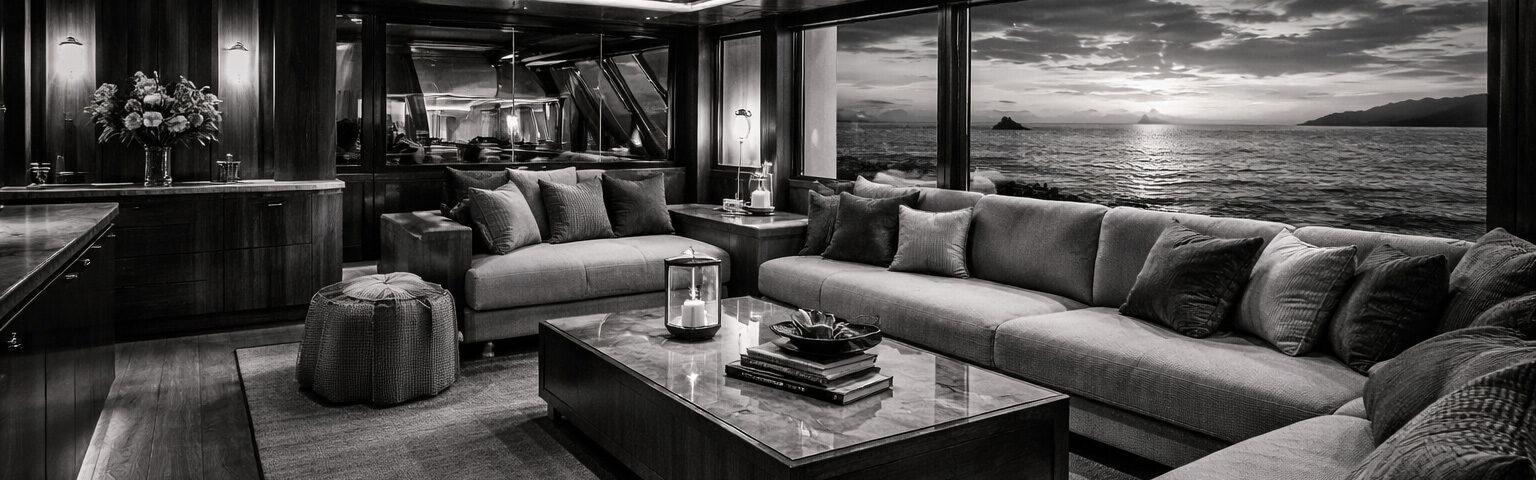
The essence of maritime living is found in the balance between rugged durability and refined comfort. Nautical interior design has moved far beyond the clichés of anchors and navy stripes; today, it is a sophisticated study in light, texture, and space. Whether on a 100-foot yacht or a coastal villa, the goal is to create a sanctuary that reflects the vastness of the horizon.
Modern maritime design is about “quiet luxury”—the use of premium materials and minimalist silhouettes to let the natural beauty of the water remain the focal point.
1. Materiality: The Teak and Brass Tradition
Sustainability and quality are the cornerstones of the nautical palette. Reclaimed teak, favored for its moisture resistance and rich grain, remains the dominant wood choice. When paired with brushed brass or matte steel accents, it creates a tactile environment that feels both historic and contemporary. These materials are chosen not just for their aesthetic, but for their ability to age gracefully in a maritime environment.
2. The Architecture of Light
In a coastal or shipboard interior, light is a primary building material. Modern designers prioritize floor-to-ceiling windows and reflective surfaces to pull the shimmering blue of the water deep into the living space. This “blurring of the lines” between the interior and the exterior is a hallmark of high-end architectural design, creating a sense of infinite space even in compact cabin layouts.
3. Minimalist Cabin Philosophy
Effective maritime design requires an obsession with ergonomics. In a cabin, every inch must serve a purpose. We are seeing a shift toward “invisible storage” and multi-functional furniture—tables that descend to create berths, or seating that integrates hidden technology. This decluttered approach ensures that the mind can rest as easily as the body.
4. The Coastal Color Palette
The 2026 palette has moved away from stark whites into “sand tones” and “deep slate.” These colors mirror the natural environment of the shore and the deep ocean, providing a neutral backdrop that highlights the craftsmanship of the furniture and the precision of the joinery.
Final Editorial Thoughts
Modern nautical design is an invitation to slow down. By focusing on materiality, light, and minimalist efficiency, we create spaces that resonate with the rhythm of the tide. Whether you are outfitting a new vessel or bringing the spirit of the coast to your home, the principles of maritime living offer a timeless blueprint for elegance.