
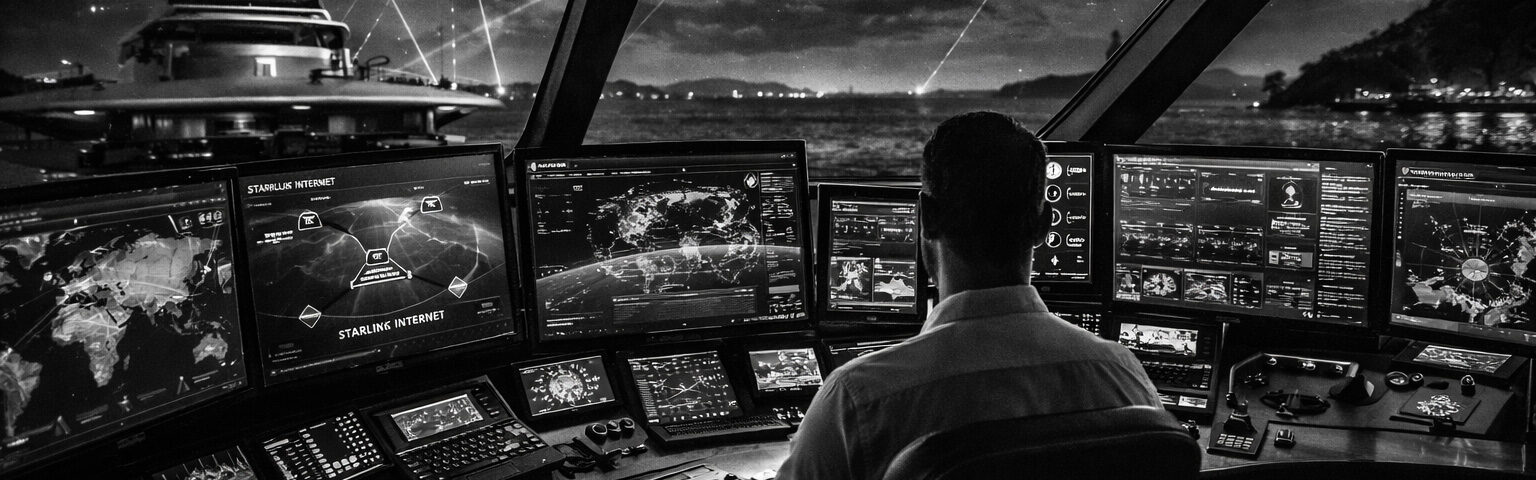
The modern yacht is no longer just a feat of naval architecture; it is a sophisticated data center on the water. As we move further into 2026, the “Digital Bridge” has become the heart of the maritime experience. For the modern owner and traveler, connectivity is no longer a luxury—it is a baseline requirement that defines the vessel’s capability.
From low-earth orbit satellite arrays providing global gigabit speeds to AI-integrated navigation systems, the technology onboard today’s yachts is as impressive as the design of their hulls.
The Starlink Revolution: Seamless Global Connectivity
Perhaps the most significant shift in recent years is the integration of high-bandwidth satellite internet. Systems like Starlink Maritime have fundamentally changed how work and leisure coexist at sea. It allows digital nomads and global executives to host high-definition video conferences from the middle of the Andaman Sea as reliably as they would from a Bangkok boardroom.
AI-Driven Navigation and Safety
Artificial Intelligence is now standard in modern bridge systems. These “smart” autopilots do more than just follow a compass heading; they analyze radar data, sonar sweeps, and global weather patterns in real-time to suggest the most fuel-efficient and stable routes. This level of technical precision is essential for the luxury yacht market, where safety and efficiency are paramount.
The Integrated Smart Cabin
The “Internet of Things” (IoT) has migrated from the smart home to the smart stateroom. Integrated control systems now allow guests to manage climate, lighting, and entertainment via localized tablets or personal devices. These systems are often paired with high-fidelity audio arrays, ensuring that the acoustic experience matches the visual grandeur of the coast.
Sustainability Through Data
Technology is also driving the green revolution on the water. Smart power management systems optimize the use of hybrid engines and solar arrays, significantly reducing the carbon footprint of modern cruising. By monitoring fuel consumption and hull drag through sophisticated sensors, captains can now operate vessels with a level of environmental consciousness that was previously impossible.
Final Thoughts
The bridge of a modern yacht is a testament to human ingenuity. As we look toward the future, the integration of smart tech will only deepen, creating vessels that are safer, faster, and more connected than ever before. For the nautical enthusiast, staying ahead of the tech curve is just as important as knowing your knots.